this very long written work was the culminating project of my senior year. i worked on this throughout junior year and on through the first semester of my senior year. this exploratory project examines culturally relevant education, its benefits and drawbacks, and how to apply it in the classroom. this full apa paper consists of a proper abstract, methodology, and discussion in addition to the review of literature and application. included is the full pdf version for easier reading and a more isolated pdf view of the lesson plans. however, the essay may also be read in this online format.
Table of contents
Abstract
Review of Literature
Methodology
discussion
Lesson plans
References
Strangers Like Me: Creating a Culturally Relevant Classroom
Abstract
Culturally relevant education (CRE) is a relatively new idea with various means of application across content areas. CRE aims to connect students with their own culture and the diversity surrounding them by involving students in multicultural literature, discussions surrounding identity, and current events. This project compiles several sources to explain CRE in a cohesive way through a comprehensive review of literature. This project also seeks to synthesize multiple sources of information concerning CRE into a coherent unit plan for a theoretical high school English classroom in order to create a tangible platform from which to display the benefits of CRE.
Keywords: Culturally relevant education, education, multicultural literature
Review of Literature
Culturally relevant education (CRE) is a kind of pedagogy that focuses on engaging students’ cultural knowledge, experience, and background while incorporating multicultural curricula. Because of the increasing diversity in public schools, there has been a push toward diversifying curricula to include classroom material that purposefully address a wide range of social topics (Howard & Rodriguez-Scheel, 2017). Some of these classrooms include literature that focuses on topics related to race and cultures that students may be unfamiliar with. Such texts may serve as a means of inciting classroom discussions and activities about contemporary issues surrounding race and culture. Research suggests that discussing culturally relevant social issues—past and current—with high school students is beneficial for encouraging students to become culturally literate (McNaughton, 2020). However, some teachers struggle to correctly integrate productive CRE into their classrooms for various reasons including limited views of culture (Christ & Sharma, 2018), and censorship (Knox, 2019). Even so, other studies have found that CRE can improve student engagement, cultural literacy, and cultural and racial awareness (Porterfield & Busey, 2016).
Because CRE is still relatively new and continuously evolving due to the present social and political climate, integrating the concepts and theories into practice can be a difficult transition. Thus, this research and practical application project seeks to build a comprehensive literature review about CRE and explore ways to implement it effectively. Furthermore, this project will include a three-week long lesson plan incorporating CRE in a theoretical high school English classroom to serve as an example of how CRE can be realistically used in a classroom setting.
Defining Culturally Relevant Pedagogy
Culturally relevant education is an inclusive framework termed by Dover (2013), but built upon the works of many researchers, notably Ladson-Billings’s (1995) and Gay’s (2000) ideas of culturally relevant pedagogy. It is a student-centered approach to teaching that encourages students to engage in a wealth of diversity by recognizing the importance of varying cultural backgrounds and experiences (Samuels, 2018), and teachers who practice this require a high level of cultural competence. The foundations are rooted in the beliefs that multicultural education and social justice education are important and the classroom is a site for social change (Aronson & Laughter, 2016). Gay’s (2000) CRE uses cultural knowledge and prior experience in order to make instruction more relevant to diverse students. Gay (2000) focused more on curriculum and how the teacher may make their classroom and curricula more culturally rounded (Aronson & Laughter, 2016). In conjunction, Ladson-Billings’s (1995, 2014) CRE seeks the collective empowerment of all students academically, socio-emotionally, and politically using cultural references to encourage both knowledge and pro-social behavior. It was created as a response to the neglected role of diversity in schools, particularly when it came to teaching African American students. She declared that the goal of culturally relevant pedagogy is to provide students with a way to succeed academically while maintaining their cultural identity (Ladson-Billings 1995). In a more recent article, Ladson-Billings (2014) added that CRE requires discourse with fellow educators, yes, but especially important is specific, culturally-tied discourse with students. Ladson-Billings (2014) includes not only ethnic cultures but school and socio-political cultures as well.
Throughout the development of CRE, there are three firmly fundamental principles of CRE: students must experience academic success and growth; students must develop a cultural competence and come into their own cultural identity; and students must develop a socio-political consciousness (Lopez, 2011).
Cultural competence is a key component of the goals of CRE (Aronson & Laughter, 2016; Lopez, 2011), and it can be defined as behavior that demonstrates cultural proficiency including valuing diversity and culture, managing differences, and displaying cultural knowledge (Nuri-Robins et al., 2011). While high school students are not expected to be fully culturally proficient, they ought to be working toward it. This may start with introducing students to literature and discussions in which they must interact with many different situations and points of view in order to work toward cultural acceptance and awareness.
Teacher Considerations
In order for students to even start working toward cultural competency, their teachers must have a comprehensive understanding themselves. Durden, Dooley, & Truscott (2016) understand that a culturally relevant teacher is one who has a conscious understanding of systemic inequities that impact racially diverse students. Such cultural competency is required of every teacher regardless of racial or ethnic identity. Though there may seem to be more important things to consider in the classroom, Durden, Dooley, & Truscott (2016) affirm that racial identity is indeed important to each individual, and a teacher’s cultural identity is directly linked to how they structure their classroom. Research also suggests that preservice teachers who have had education and instruction on cultural responsiveness felt more prepared to teach diverse learners, were more aware of multicultural literature and how to use it in their classrooms, and they felt more prepared to incorporate culturally responsive teaching across their curriculum (Iwai, 2019).
Text Choice and the Role of Diverse Literature
Engaging students in multicultural literature is a key component of CRE. Aronson & Laughter (2016) describe the results of some studies that utilized CRE in one way or another in English classrooms. One study suggested that the inclusion of multicultural literature lowered students’ frustration and raised their engagement because of the literatures’ relatability. Boyd et al. (2015) states that culturally diverse literature is beneficial for students because it offers a more realistic and relatable reflection of history and society. Diverse literature promotes understanding between both like and unlike people (Boyd et al. 2015; Knox, 2019). Boyd’s (2015) declarations align with the CRE principles that students must be pushed toward cultural competence and come into their own cultural identity. Knox (2019) affirms that people need diverse books because being constrained by single stories and viewpoints hinders personal discovery and growth.
Though the benefits of diverse texts are accepted, choosing literary texts—both primary and supporting or supplemental texts—is not an easy task. Holloway & Greig (2011) researched how text choices are made in secondary schools, particularly texts that address relevant societal topics. They also discussed how literary canon fit into text choices. Their findings indicate that there is some friction between teachers trying to expand and teach outside of the literary canons—the groups of literature that are the most important of a particular time period or place. Several factors contributed to the pushback against teaching within the canon including budget resources, lack of communication, lack of administrative support, and the banning of books (Holloway & Greig, 2011).
Despite the pushback, Holloway & Greig (2011) ask teachers to take risks when it comes to text selection because, although it is daunting to be the first to institute any change, socially relevant texts create a more inviting platform for students to stand upon and a more open environment in which students may feel better included, better heard, and better understood.
Classroom Implications
It is not enough to only consider the goals of CRE and the importance of including diverse literature. It is crucial to consider the Common Core State Standards (CCSS), since they are the main guidelines within which educators are required to teach. Fortunately, CRE does lend itself to accomplishing CCSS ELA objectives. The CCSS Appendix includes some selections for diverse literature in order to meet a cultural component requirement (Common Core State Standards Initiative, n.d.). While CCSS does not clearly lend itself to CRE objectives, CCSS goals may be met within the framework of CRE. Teaching with CRE is very feasible as long as standards are taken into consideration during the planning process. Dover (2013) presents a study examined how ELA teachers implemented social justice teaching within the context of teaching standards. Dover’s (2013) findings showed that the ELA teachers surveyed seek to promote sociopolitical consciousness and used a culturally relevant focus to emphasize the importance of cultural competence. The participants mentioned how teaching standards were an integral part of how they structured their lesson planning and how they considered their overall approach to teaching social justice.
Moreover, CRE takes a constructivist response to teaching as it asks students to think critically and reflect on the society in which they live and how aspects of culture apply to them personally (Dover, 2013). The framework emphasizes both the teacher’s stance in addition to teaching techniques (Dover, 2013). Thus, CRE considers students’ lives outside of school and uses that knowledge to help make an engaging, inclusive classroom for every single student (Gay, 2000; Irvine & Armento, 2001; Ladson-Billings 1995a, 1995b; Villegas * Lucas, 2002 as cited in Dover, 2013). This promotes a positive and open learning environment in which students may engage in CRE-based activities that explore varying aspects of society.
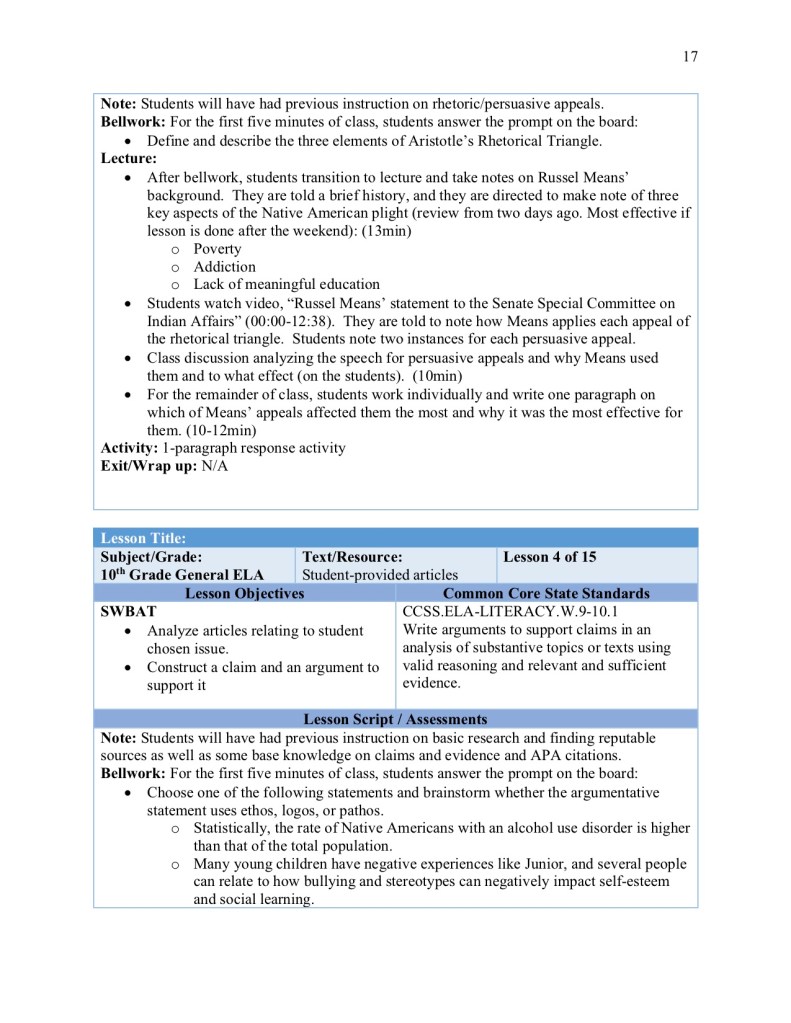
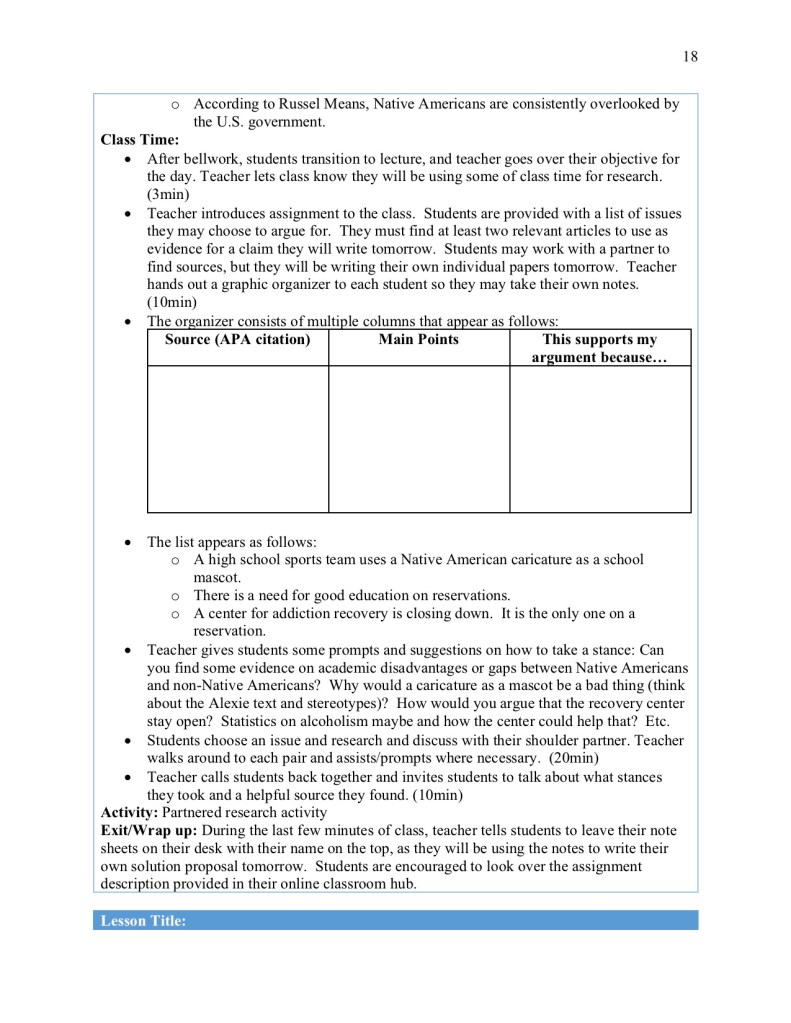
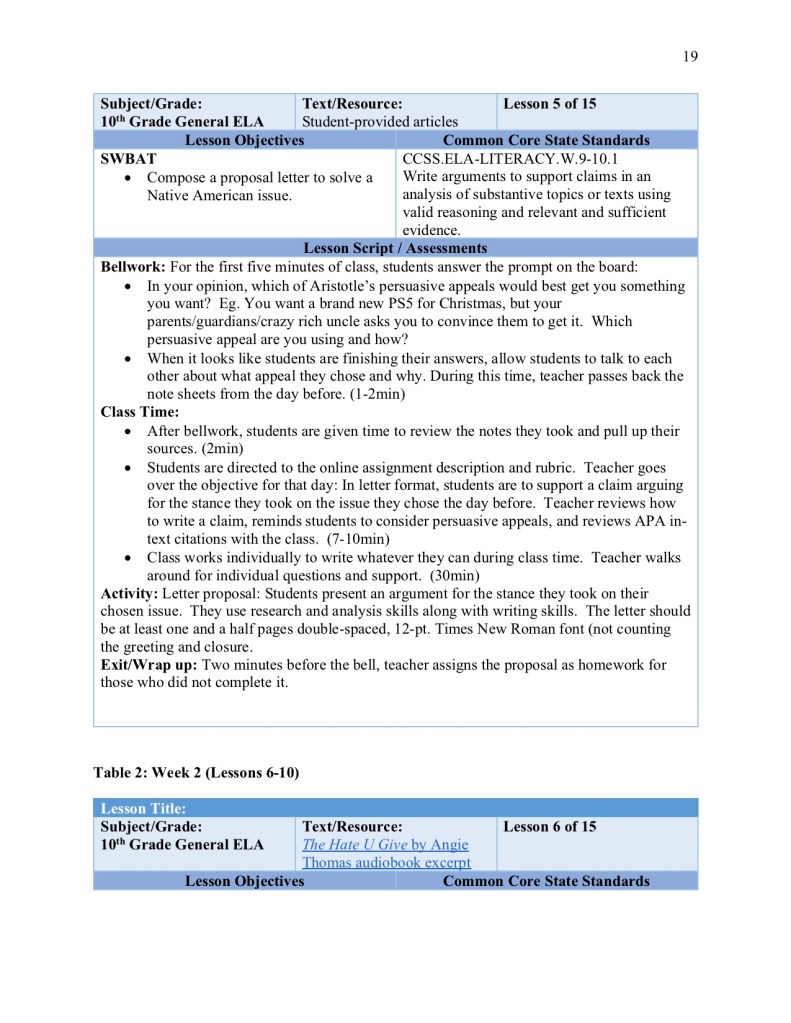
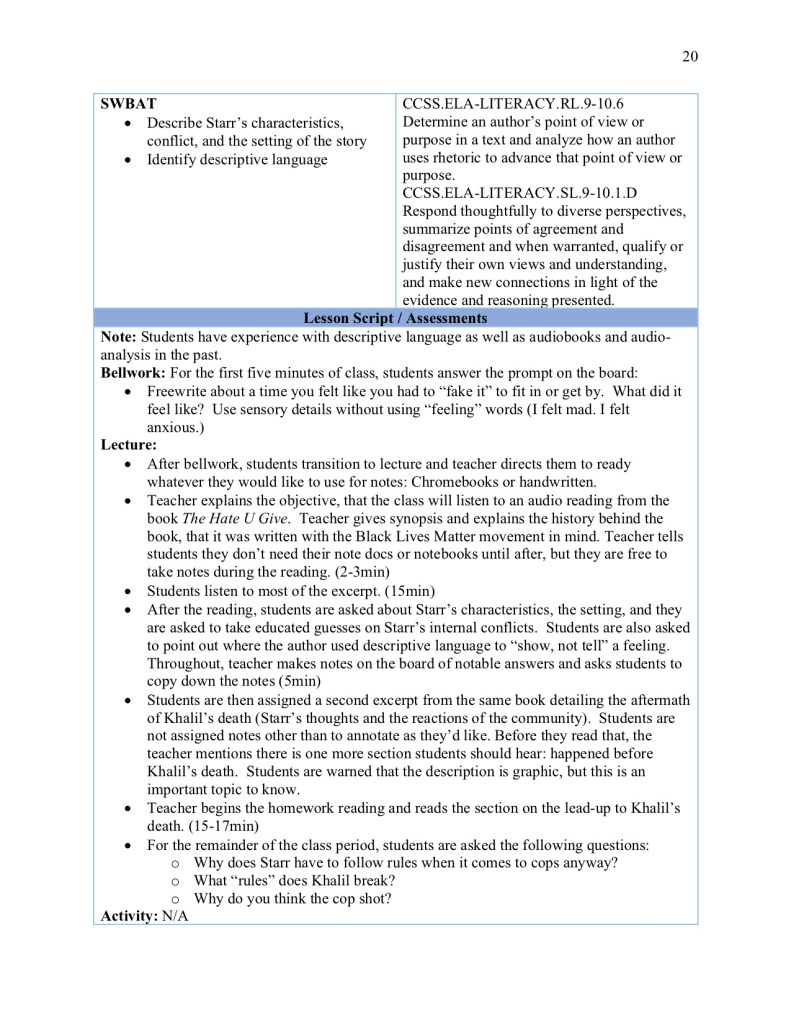
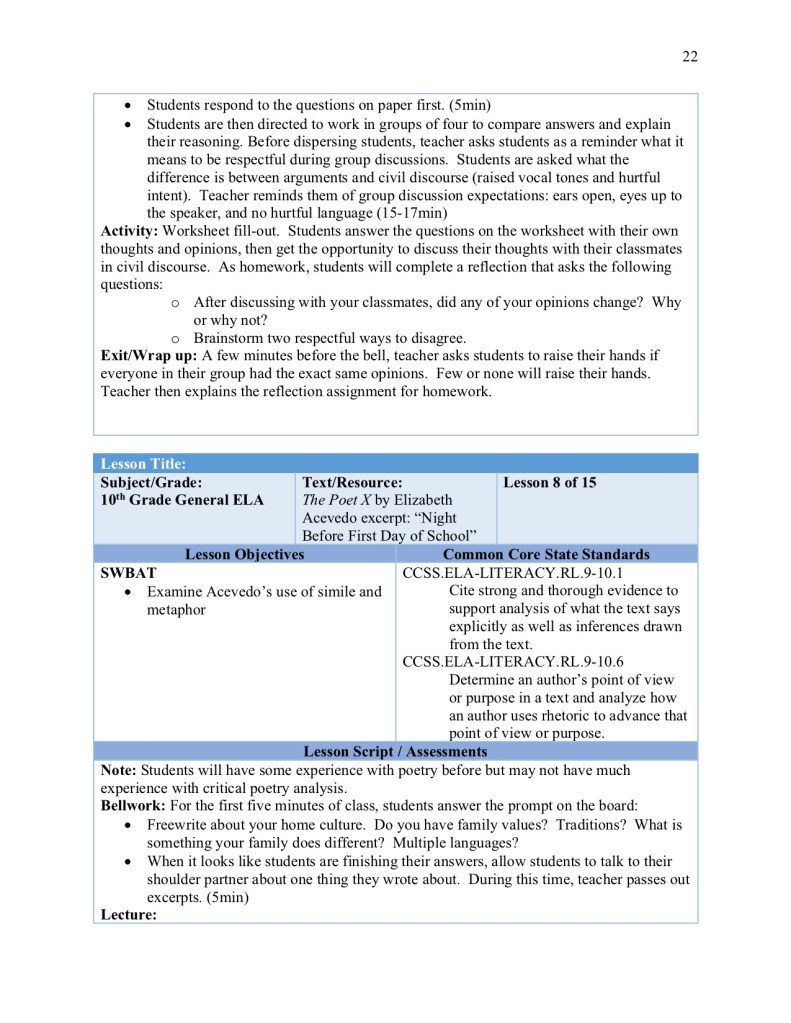
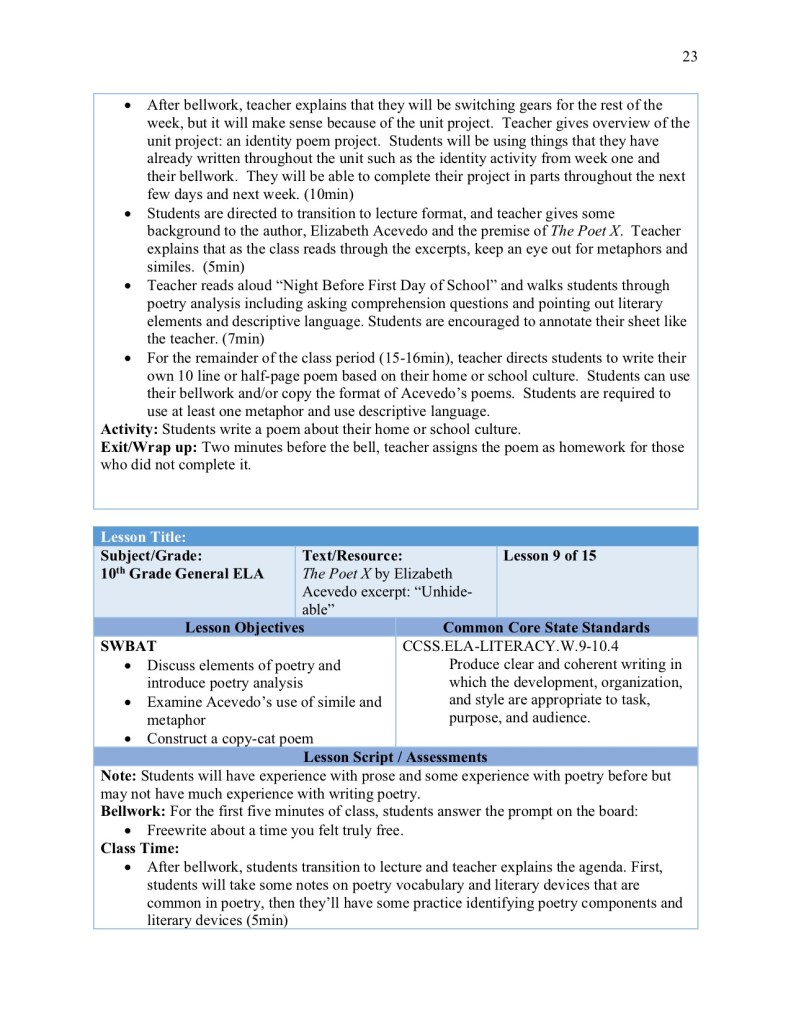
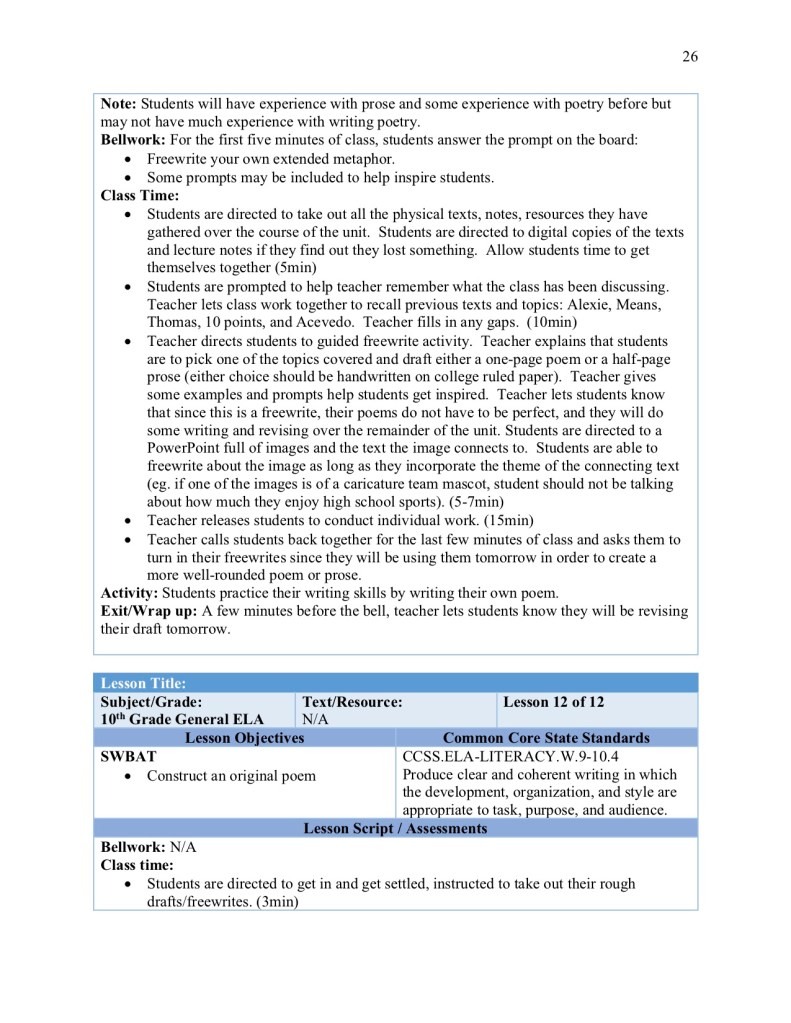
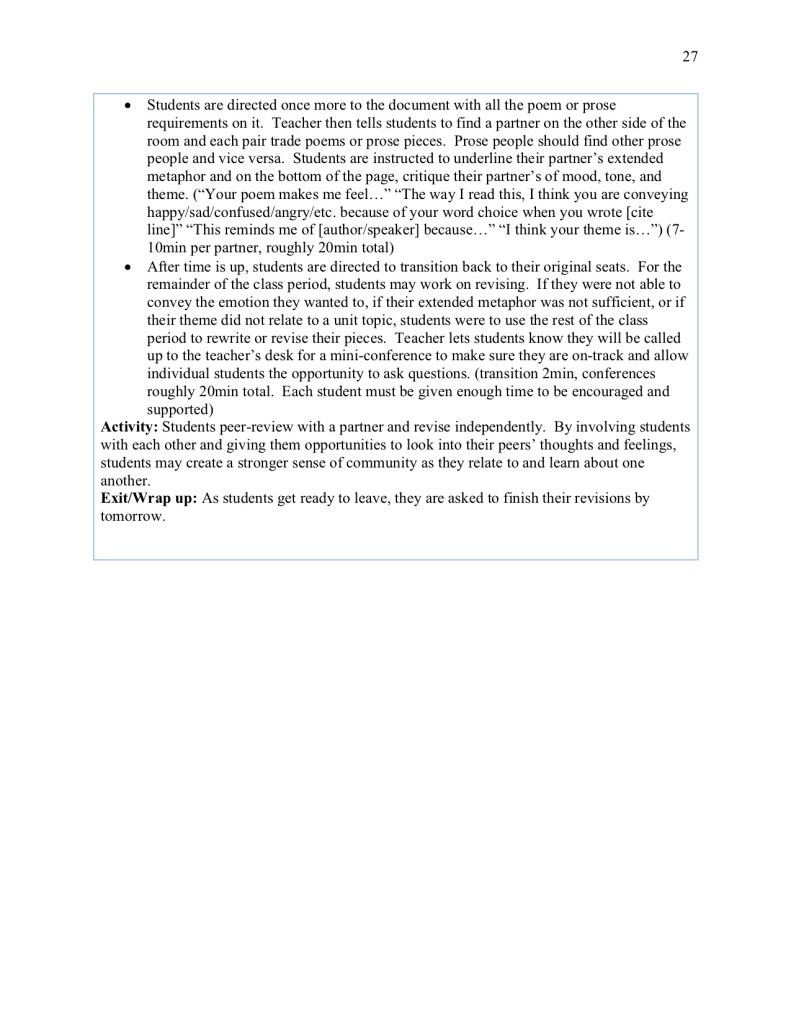
In order to provide an example of how a high school ELA might be conducted, I created a unit plan in which students utilize a variety of texts to meet Common Core State Standards relating to the practice of critical literacy, speech/multimedia analysis, and research skills. The unit spans three weeks and explores three societal focuses: the Native American plight, the urban minority experience, and finally a synthesis of the two with the skills they learned during the previous two weeks as well as the skills they would have learned prior to this unit.
Lesson plans will align with following Common Core State Standards:
CCSS.ELA-LITERACY.RL.9-10.1
Cite strong and thorough evidence to support analysis of what the text says explicitly as well as inferences drawn from the text.
CCSS.ELA-LITERACY.RL.9-10.6
Determine an author’s point of view or purpose in a text and analyze how an author uses rhetoric to advance that point of view or purpose.
CCSS.ELA-LITERACY.W.9-10.1
Write arguments to support claims in an analysis of substantive topics or texts using valid reasoning and relevant and sufficient evidence.
CCSS.ELA-LITERACY.W.9-10.4
Produce clear and coherent writing in which the development, organization, and style are appropriate to task, purpose, and audience.
CCSS.ELA-LITERACY.W.9-10.9
Draw evidence from literary or informational texts to support analysis, reflection, and research.
CCSS.ELA-LITERACY.SL.9-10.1.D
Respond thoughtfully to diverse perspectives, summarize points of agreement and disagreement and when warranted, qualify or justify their own views and understanding, and make new connections in light of the evidence and reasoning presented.
CCSS.ELA-LITERACY.SL.9-10.3
Evaluate a speaker’s point of view, seasoning, and use of evidence and rhetoric, identifying any fallacious reasoning or exaggerated or distorted evidence.
Methodology
In order to create a detailed three week-long unit plan, it is imperative to first build a comprehensive understanding of CRE as well as its benefits, challenges, and possible implications. I reviewed research and studies from the theories and practices that synthesized to create CRE as well as studies the focused on CRE in the classroom or the implementation of specific parts of CRE (such as text selection, discussion-based classes, etc.). After constructing a comprehensive review of literature, I then created an original set of lesson plans spanning three weeks that integrates and actively applies CRE theories, concepts, and practices to fit a high school English classroom setting. The theoretical classroom will be assumed to be a general education classroom with a normal assortment of high achieving students included with on-track and low-performing students. Elements of the lesson plans will include text selection and explanations for choosing each text, an outline of the activities for each day, and assignment descriptions for any written assignments and projects. The lesson plan is not in direct sequential order, since in a real classroom, there will be some class sessions dedicated to things such as reviewing and revising written works as well as school factors such as abnormal academic schedules (institute days, holiday off-days, etc.).
Discussion
The implications of culturally relevant education are not without resistance. Although there are many sources that are in support of CRE, they also recognize the limitations and areas where the pedagogy may improve. Throughout my unit plan, I leaned into the strengths and acknowledged the limitations of CRE by choosing broad topics rooted many students will be at least somewhat familiar with from previous social studies or English language arts courses, namely the Native American socio-economic state and the urban minority experience. Within these topics, I am able to ask more specific questions to encourage students to connect the texts and multimedia to themselves, the community around them, and finally to the world outside their classrooms.
Support for CRE
When considering the incorporation of CRE, it is important to acknowledge the newness of the pedagogy. Case studies and their results are not fixed or complete evidence of CRE’s successfulness. Even so, the positive results of CRE implementation are crucial to its development and acceptance by the education community as a tool for positive change.
In McNaughton’s (2020) study on how exposure to multicultural literature affected high school students’ ability to understand complex social issues, results concluded that students were reluctant to engage in multicultural texts because the social issues and topics within the texts made them uncomfortable, as they were unfamiliar with the discussion topics and book themes. However, upon observing the students outside of class, McNaughton (2020) noticed the students openly talked about the texts with other classmates. In conjunction with the research in English contexts that suggests students learn at an increased rate when they are able to make personal connections to texts and topics (Aronson & Laughter, 2016; Christ & Sharma, 2018; Iwai, 2019; Lopez, 2011), students are also encouraged to practice pro-social behavior outside of the classroom. This may look like engaged discussions outside the classroom, students asking questions on their own, or students activating prior knowledge to make educated judgements about new and complex socio-emotional topics.
In addition, Lopez (2011) supports a positive connection between CRE and increased critical literacy as long as students felt comfortable engaging in culturally-tied discussions. Having a supportive classroom environment is the determining factor for whether CRE will be effective or not. This aspect of teaching is difficult to reflect in a hypothetical unit plan, but assuming the teacher established their classroom as a safe space in which students were free to ask uncomfortable questions, the academic challenge of cultural learning may take place.
Limitations
CRE emphasizes both the teacher’s stance as well as teaching techniques (Dover, 2013). In addition, CRE considers students’ lives outside of school and uses that knowledge to help make an engaging, inclusive classroom for every single student (Gay, 2000; Irvine & Armento, 2001; Ladson-Billings 1995a, 1995b; Villegas & Lucas, 2002 as cited in Dover, 2013). In congruence, Howard & Rodriguez-Scheel (2017) determined that culturally relevant education can possibly start to lessen the academic and social disparity between diverse individuals through exposure to diverse texts and positive culturally grounded experiences. They advocate for changes in the way educators look at instructional practices to include cultural education. However, Howard & Rodriguez-Scheel (2017) acknowledge that though the theories surrounding CRE have been accepted, praised, and conceptualized, many educators are very unfamiliar with how to implement it in their classrooms. In fact, many teachers recognize the urgent need to cultivate a diverse and well-rounded classroom, but feelings of unpreparedness often hinder them from stepping out and incorporating multicultural education into their classrooms (Iwai, 2019). Furthermore, there is a lack of studies on what CRE looks like in practice, much less sustained implementation. One reason for this is because culturally relevant teaching cannot be reduced to a simple step-by-step process (Howard & Rodriguez-Scheel, 2017). CRE is not a one-size-fits-all kind of pedagogy. It is dependent on classroom makeups and school culture, student values, and teacher values as well. Because of this, even a long-term study cannot determine one great way that works. It is instead up to the educators to figure out what works best for their classrooms.
In the unit plan, I was met with several obstacles trying to seamlessly focus on both CRE and CCSS-based objectives. Thinking of a theoretical classroom instead of testing the unit on a real-life group of students raised more questions and anxieties. Although I did my best to cover broad topics, if I were preparing to teach the unit to an established classroom, I may have felt more confident looking into more specific topics that the students may connect with better.
Further Research
In pursuit of CRE implementation, it would be useful to conduct a long-term study in high school classrooms and focus on more seamless incorporation into curricula. While constructing the lesson plan, I had difficulty shifting focus from social and cultural issues and topics to activities and lesson trajectories that met CCSS requirements. In the future, it may be interesting to see more studies that focus on intertwining CCSS and CRE in a way that leaves both teachers and students comfortable with pacing and lesson goals.
In order to search for ways culturally relevant education may be practically applied to a high school English classroom, this study explored the theory of CRE, its current use, benefits and challenges, and finally created a research-based mini-unit plan implementing CRE into a high school English classroom. After examining sources, compiling research, and considering data, it is evident that there are some adjustments to the practice that can be made. However, given that CRE is a relatively new framework, there is much space for it to evolve as the socio-political climate evolves and the need for cultural competence becomes more known. Whilst there are several articles that detail the benefits of CRE and culture-based education, there are few that go beyond a case study. Furthermore, there are significantly less studies exploring CRE in the high school English classroom. By exploring how CRE may be implemented in a variety of subjects and at a variety of grade levels, educators may obtain a clearer picture of how valuable CRE can be. Educators can then shift the focus from purely academic achievement and also consider how culture ties itself closely to not only academics, but also social-emotional learning as students may learn how to accept their own cultural identities and move toward cultural proficiency.
Lesson plans





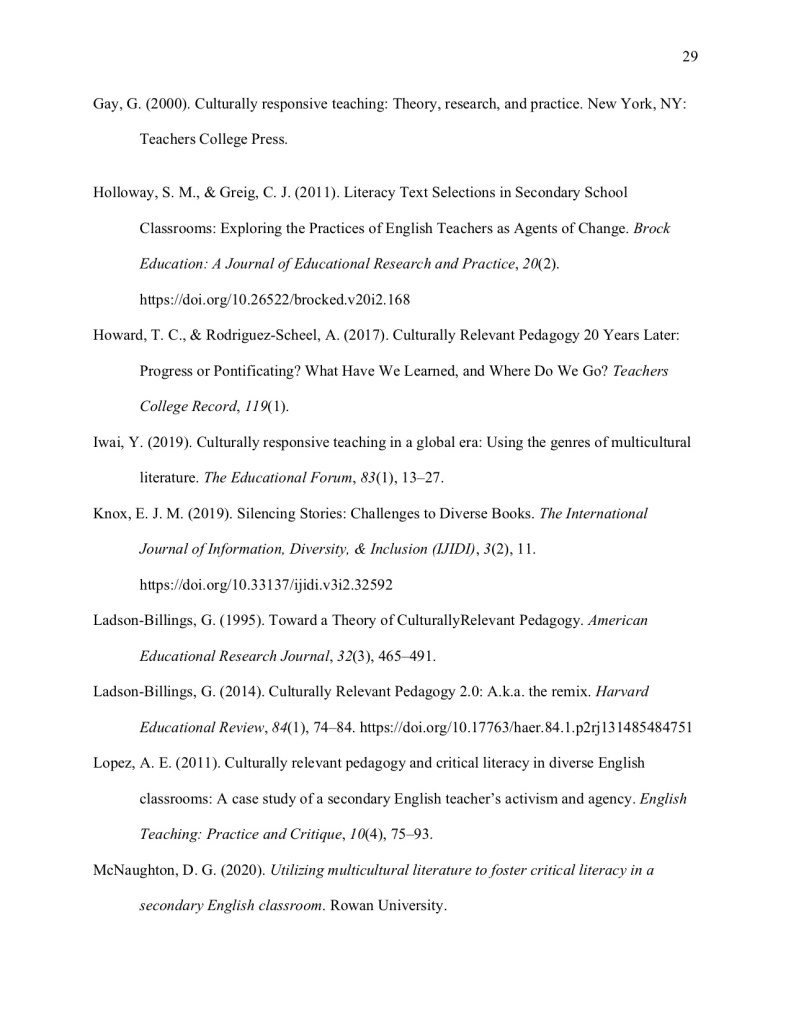
References


 Research and Ramblings